Construction Fleet Inspections: From Job Site Requirement to Risk Signal
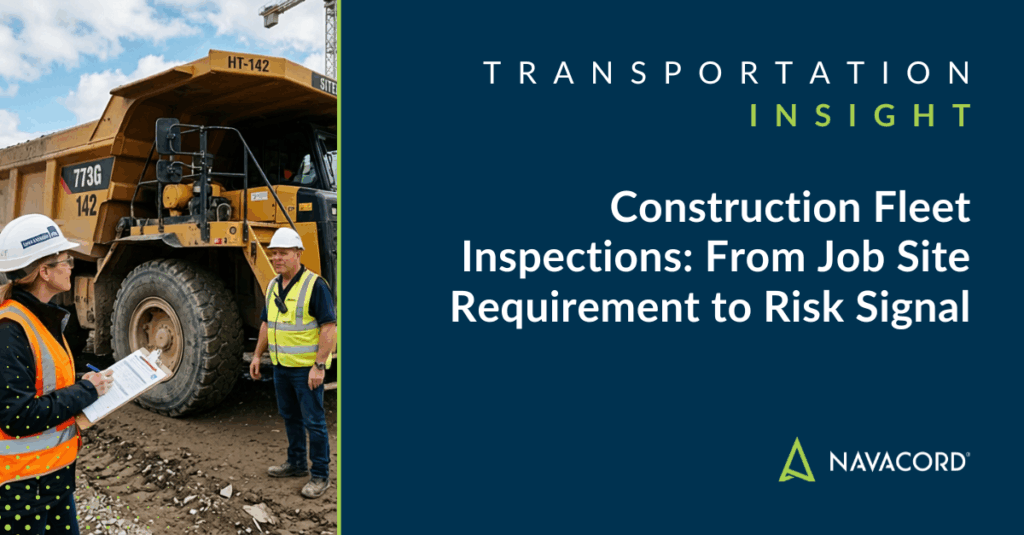
In Canada’s construction sector, fleet inspections are a routine part of operations. Trucks, trailers, and specialized vehicles move constantly between yards, job sites, and public roads. Inspections are mandated by regulation, expected by insurers, and often treated as another administrative task in a fast‑paced project environment.
What is less visible is how closely insurers rely on inspection practices to assess risk—and how those assessments increasingly influence premiums, deductibles, and long‑term insurability. In today’s selective commercial auto market, construction fleet inspections are no longer viewed solely as a compliance obligation. They have become a signal of how effectively a contractor manages operational risk.
Insurance Pressure on Construction Fleets
Commercial auto insurance across Canada remains under pressure from rising repair costs, labour shortages, supply‑chain delays, and inflation. Construction fleets operate in congested work zones, tight schedules, and mixed traffic environments, increasing both collision frequency and severity.
Insurers have responded by tightening underwriting standards, particularly for construction, infrastructure, and civil works fleets. Vehicles that routinely move between job sites and public roadways now face greater scrutiny. Underwriters are placing more weight on direct, verifiable indicators of fleet control, making inspection practices a central factor in risk evaluation between scheduled maintenance intervals.
How Insurers View Inspection Programs
Inspections are not assessed on a simple pass‑fail basis. A single inspection reflects vehicle condition at a moment in time; a consistent inspection program tells a broader story about operational discipline.
Given the harsh conditions construction vehicles face—uneven terrain, vibration, dust, and frequent stops—insurers expect defects to occur. What matters is whether inspections reflect real‑world usage and whether identified issues are addressed promptly.
Underwriters typically look for inspection frequency aligned with operating conditions, clear documentation of defects and repairs, defined accountability, and evidence that inspection findings inform preventive maintenance. While enforcement varies across provinces, insurers expect consistent internal standards regardless of jurisdiction.
Mechanical Risk and Liability Exposure
Mechanical defects remain a significant contributor to collisions and job‑site incidents, particularly involving brakes, steering components, tires, and lighting systems. Construction vehicles often operate close to workers, equipment, and public traffic, increasing the consequences of mechanical failure.
After serious collisions, inspection and maintenance records are reviewed alongside driver training and site safety procedures. In incidents involving injuries or fatalities, these records can play a critical role in assessing due diligence. Inspections therefore function not just as operational tools, but as insurance and legal documents that demonstrate whether reasonable steps were taken to manage foreseeable risk.
The Cost of a Reactive Approach
In many operations, inspections receive renewed attention only after enforcement action, a major claim, or a difficult insurance renewal. By then, the impact is often already reflected in pricing or coverage terms.
Insurers frequently observe that fleets facing sharp premium increases had inspection programs that identified defects but failed to ensure timely repairs. Production pressures and dispersed job sites commonly undermine follow‑through. From an underwriting perspective, this suggests risk management competes with operational priorities rather than being integrated into them.
Inspections as an Operational Signal
Construction firms that treat inspections as part of everyday operational discipline tend to experience more stable insurance outcomes. Inspection findings are tracked, recurring issues analyzed, and data used to guide maintenance, deployment, and replacement decisions.
This approach reduces preventable disruptions, improves audit and renewal outcomes, and supports more constructive underwriting discussions. Over time, inspections become a source of operational intelligence rather than a paperwork exercise.
Conclusion
As insurers rely more heavily on data and loss trends remain volatile, the influence of construction fleet inspections on underwriting and renewals will continue to grow. For contractors, the question is no longer whether inspections are required, but what those inspections communicate about the organization’s approach to risk.
Handled effectively, fleet inspections can do more than satisfy regulators. They can demonstrate operational maturity, strengthen safety systems, and support long‑term insurability in an increasingly challenging market.
To download the insight, click here.